Helping Surviving Pets Cope After In-Home Euthanasia in Jupiter, FL

Losing a beloved pet breaks your heart. When you have a multi-pet household, your surviving animals feel that painful absence right alongside you. If you need compassionate support during this difficult time, contact Rover Veterinary Care at (561) 295-7979. We provide peaceful pet euthanasia for families across Jupiter and Palm Beach County.
Do Pets Grieve Like We Do?
Animals absolutely grieve the loss of a companion, though they show it differently than we do. You'll likely see behavioral changes within 24 to 48 hours. Look for decreased appetite, changes in sleep patterns, vocalizing, or wandering around the house searching for their missing friend. Dogs and cats live entirely in the present moment, meaning they don't understand the finality of death the way humans do.
In our years serving Central Florida families, we see a wide range of reactions from surviving pets. Some animals become clingy and demand extra attention from their owners. Others withdraw completely and hide under beds or behind furniture for days. You might notice your dog pacing near the front door or your cat refusing to use the litter box. These are all normal reactions to a major disruption in their daily pack structure.
How In-Home Euthanasia Impacts Surviving Pets
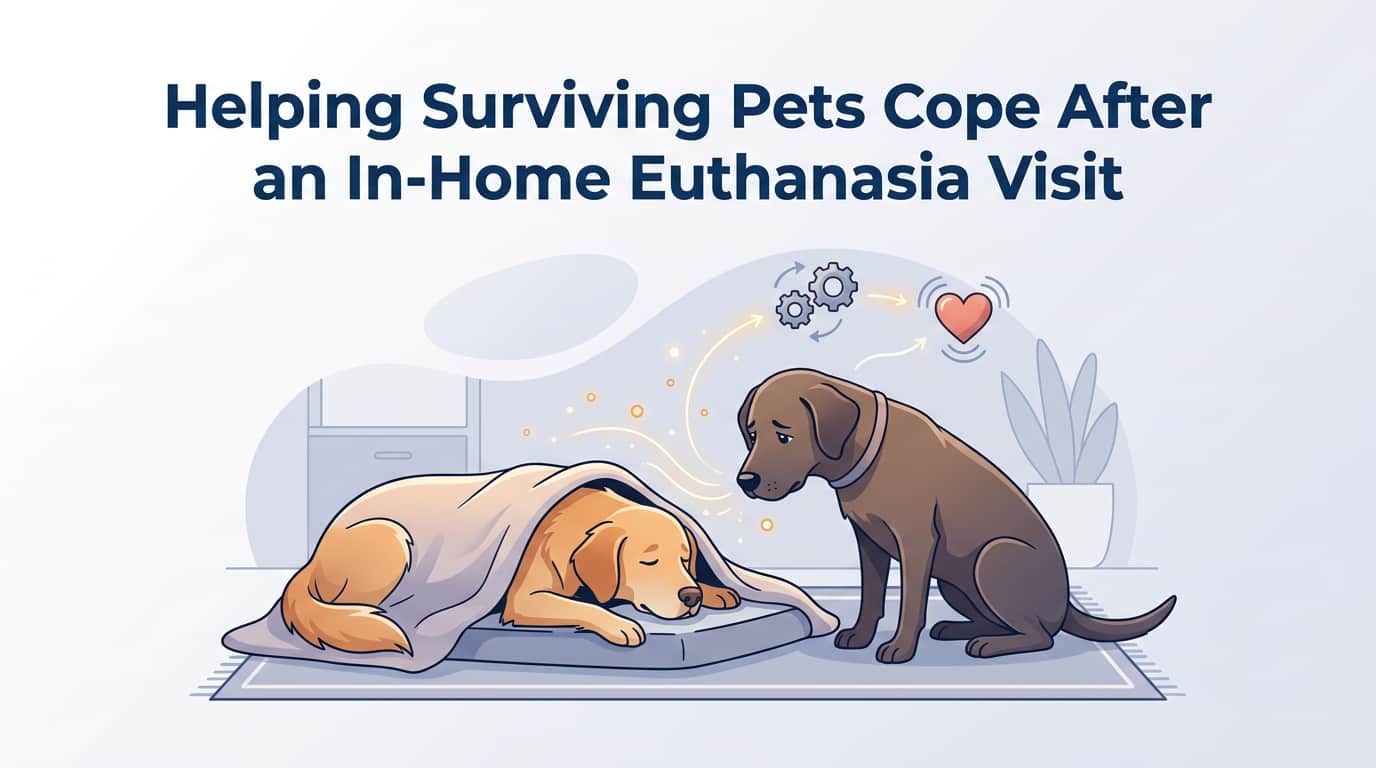
Scheduling an in home euthanasia Jupiter, Florida, helps surviving pets understand exactly what happened to their friend. When an animal passes away at home, the surviving pets can smell the changes in their companion's body. This scent provides immediate closure. When a pet goes to a clinic and never comes back, the remaining animals often spend weeks waiting by the window in confusion.
Allowing your other pets to be present in the room removes the mystery of the disappearance. The familiar smells of your living room keep their stress levels much lower than a chaotic clinic visit. They get to process the transition in a safe, predictable environment.
Immediate Steps for Creating a Supportive Environment
Keep your daily routine exactly the same. Feed them at their usual times, walk them on their normal schedule, and maintain consistent bedtimes. Predictability creates security for animals. A sudden loss shatters their world, so keeping their daily schedule locked in provides a comforting anchor during a confusing time.
Set up a quiet, secure area where your pet can retreat if they feel overwhelmed. Leave a worn t-shirt with your scent in their bed to provide reassurance. We often suggest keeping the deceased pet's favorite blanket unwashed for 30 to 60 days. The lingering smell brings immense comfort to animals trying to process the absence of their friend.
Behavioral Interventions and Enrichment
Increase the amount of time you spend playing and interacting with your surviving pet. Add an extra 15 to 20 minutes of active play to their daily schedule to burn off anxious energy and trigger the release of endorphins. Take your dog for a new walking route near the Loxahatchee River to provide fresh mental stimulation and positive distractions.
Pets who lose a bonded pair often develop sudden separation anxiety. Practice leaving the house for short intervals of 5 to 10 minutes, gradually increasing the time. Give them a high-value puzzle toy stuffed with frozen peanut butter right before you walk out the door. This builds positive associations with your departure and keeps their minds occupied.
Managing Changes in Household Dynamics
The loss of a pet drastically shifts the social hierarchy in your home. The surviving pets now have to figure out who leads the pack. You might witness minor scuffles over toys or resting spots while they establish a new order. Don't interfere unless physical harm is imminent, as they need to work out these new boundaries naturally.
Wait at least three to six months before bringing a new animal into the home. Your current pets need time to process their grief and adjust to the new normal. Rushing out to adopt another dog or cat will only create territorial stress and behavioral setbacks. Let your current pack heal before introducing a stranger into their territory.
Nutritional Support and Well-being
Monitor your pet's eating habits closely after the loss. A grieving dog or cat might skip meals for a day or two out of stress. Try warming up their regular kibble or mixing in a tablespoon of plain, unsalted chicken broth to entice them to eat. Small indulgences are fine, but avoid drastically changing their core diet to prevent stomach upset.
If your cat stops eating completely for 24 hours, or your dog refuses food for more than 48 hours, call your veterinarian immediately. Cats can develop a fatal liver condition called hepatic lipidosis if they stop eating for even a short period. Medical intervention becomes necessary to keep them healthy while they mourn.
The Role of Scent in Pet Grief
Scent dictates how animals understand their entire environment. Keep the deceased pet's collar or unwashed bedding in the main living area. You can also plug in synthetic pheromone diffusers, which release calming scents that mimic nursing mothers. These diffusers typically cost around $30 to $50 and last for a full month.
When we handle an in home euthanasia Jupiter, Florida, we advise families against immediately scrubbing the house top to bottom. Removing every trace of the lost pet causes intense confusion for the animals left behind. Fade their scent out gradually over a few weeks to ease the transition.
When to Seek Professional Help
Seek professional behavioral help if your pet shows severe signs of distress for more than 30 days. These warning signs include self-mutilation, extreme lethargy, unprovoked aggression, or relentless vocalizing day and night. Your veterinarian will need to examine them to rule out underlying medical issues first.
If the vet gives a clean bill of health, consult a certified veterinary behaviorist. They can prescribe anti-anxiety medications or design a targeted behavioral modification plan for your specific situation. Sometimes, a grieving pet just needs a little pharmaceutical support to overcome the worst of their daily anxiety.
Self-Care for Pet Parents
You must take care of your own emotional health to help your pets heal. Animals are highly empathetic and will absorb your stress and sadness if you constantly project it. Allow yourself grace and time to mourn the loss of your family member. Seeking support from pet loss groups or professional counselors helps you process the pain effectively.
Our team at Rover Veterinary Care understands this pain firsthand. Many families find comfort walking their remaining dog through the quiet, familiar trails of Abacoa. Finding a peaceful spot gives both the owner and the pet a necessary moment to breathe, reflect, and find comfort in each other's company.
The Bottom Line on Healing Together
Healing from a loss takes immense patience, a strict routine, and a lot of love. Your surviving pet relies entirely on you for stability during this heartbreaking transition. Focus on keeping their world predictable, giving them extra daily affection, and allowing them to adjust at their own pace.
If you are facing the end of your pet's life and need compassionate guidance, our team is here to support your entire family. Contact Rover Veterinary Care at (561) 295-7979 to schedule an in home euthanasia Jupiter, Florida. We provide peaceful, dignified care right in the comfort of your own living room. Euthanasia services start at $450, with standard travel fees applying outside a 30-minute radius of Jupiter Town Hall.