
You know your cat's routines better than anyone, so when something feels off, trust that instinct. Cats hide pain far better than dogs do, which means real discomfort can sit right in front of you and still go unnoticed for weeks. If you're starting to wonder whether your cat is quietly struggling, this guide walks through the signs vets look for, and how Rover Veterinary Care can help once you have a clearer picture. Call (561) 295-7979 to talk with our team about what you're seeing at home, or read on first.
Why is pain in cats harder to spot than in dogs?
Cats are even more stoic than dogs, and the signs of pain they do show are subtler and easier to write off as just getting older. A big part of the problem is how differently the two species move through daily life. Dogs go for walks, so a limp or a hesitation on the stairs is obvious within the first few steps out the door. Cats do most of their moving in short bursts around the house, jumping onto a windowsill or padding over to the food bowl, so a slight limp or stiffness can hide inside normal-looking behavior for a long time. You might not notice anything physical at all. Instead, the first real clue is usually a change in how your cat acts rather than how she moves. A cat in pain often becomes quieter and less interested in the things that used to matter to her, and that kind of shift is easy to chalk up to mood or age instead of pain. That is exactly why behavior deserves as much attention as the body when you're trying to figure out what's going on.
What changes in behavior should I watch for?
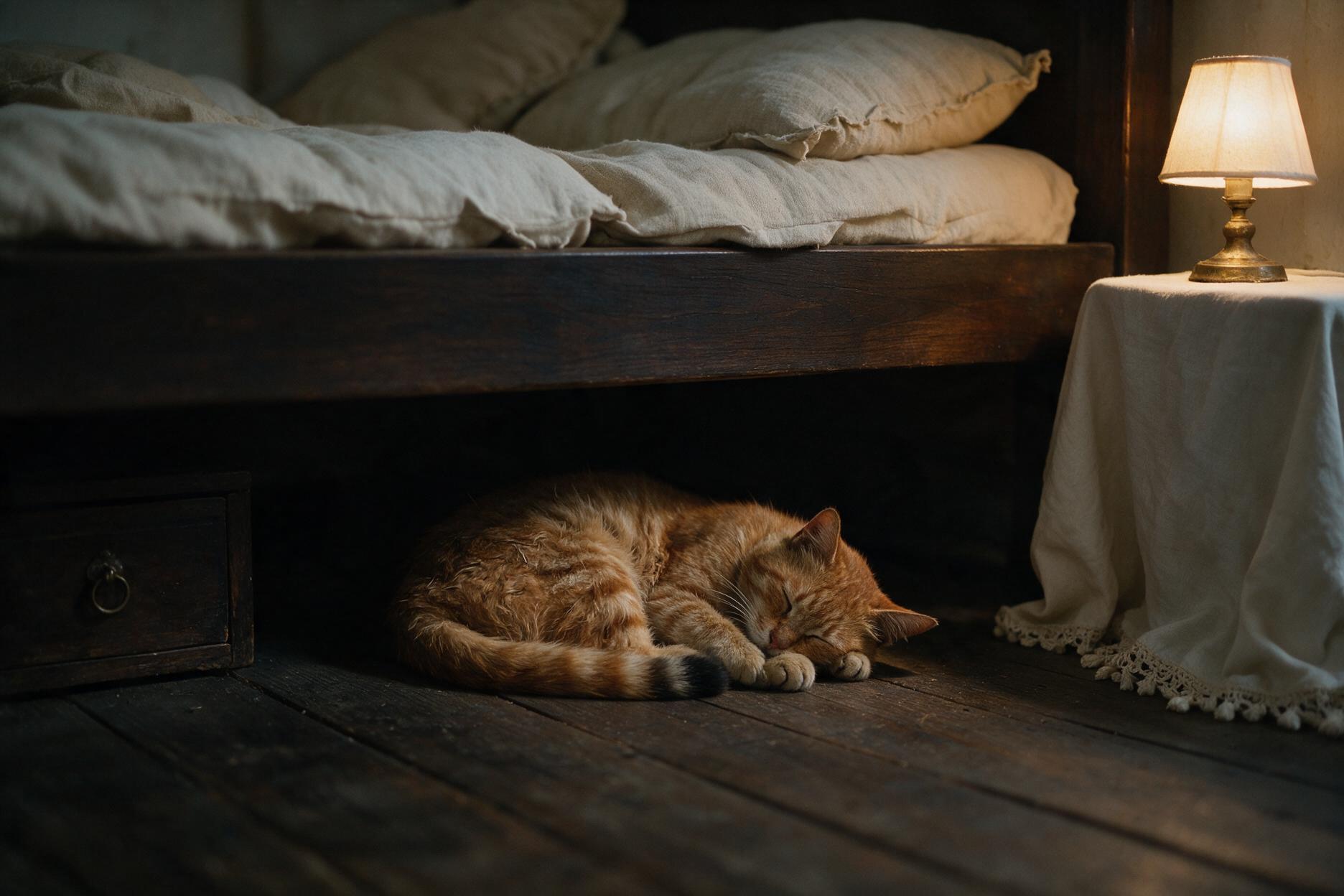
Watch for any shift away from your cat's normal social pattern, especially sudden hiding. A cat who has always greeted you at the door or curled up next to you during movie night is telling you something if she starts disappearing into closets or wedging herself under the bed instead. That kind of withdrawal is one of the clearest signals that a cat does not feel well, even when nothing else looks obviously wrong. Other things worth noticing include a cat who stops jumping onto the counter or windowsill she used to love, or one who reacts with a hiss or a flinch when you touch a spot she used to enjoy being petted. She might also groom herself less and start looking a little unkempt. None of these changes prove there's pain behind them, but together they build a picture. If you notice more than one at once, it's worth paying closer attention rather than assuming it's just a phase that comes with age.
What about the litter box and eating habits?
Litter box habits and appetite are two of the most reliable places to look, and both can point straight to pain. A cat who suddenly stops using the litter box, or starts having accidents just outside it, may be dealing with arthritis that makes climbing over a high side genuinely uncomfortable. It isn't defiance or a behavior problem so much as a body that can't do what it used to do without hurting. Eating habits can be trickier to track, especially in a free-fed household or a home with more than one cat sharing a bowl. It's easy to assume everyone is eating fine when food disappears from the dish, and it's just as easy to miss that one particular cat has quietly stopped coming around until you notice ribs you can suddenly feel or a coat that has lost its shine. By the time weight loss is obvious, the discomfort behind it has usually been building for a while. If any of this sounds familiar, our quality-of-life resources can help you think through what you're seeing before your next vet visit.
What to do when your cat seems to be declining
Start with your primary veterinarian, since finding and treating the cause of your cat's pain is always the first and best step. Many of the changes described above respond well to treatment once a vet identifies what's behind them, and your cat may have real relief ahead. But if your cat's decline feels further along, and you're starting to weigh questions about her overall quality of life rather than just her comfort on a given day, Dr. Katie offers a Comfort Care Assessment. It's an in-home visit where she evaluates how your cat is really doing and talks through it honestly with you, including what in-home pet euthanasia would look like if and when the time comes, with no pressure either way. You are not failing your cat by noticing these signs, and you are not overreacting by asking for help. Acting on what you can see in front of you, rather than waiting for certainty that may never come, is what a caring owner does. When you're ready to talk, call (561) 295-7979 or reach out through our contact page. A conversation does not commit you to anything, it just gives you somewhere to start.