
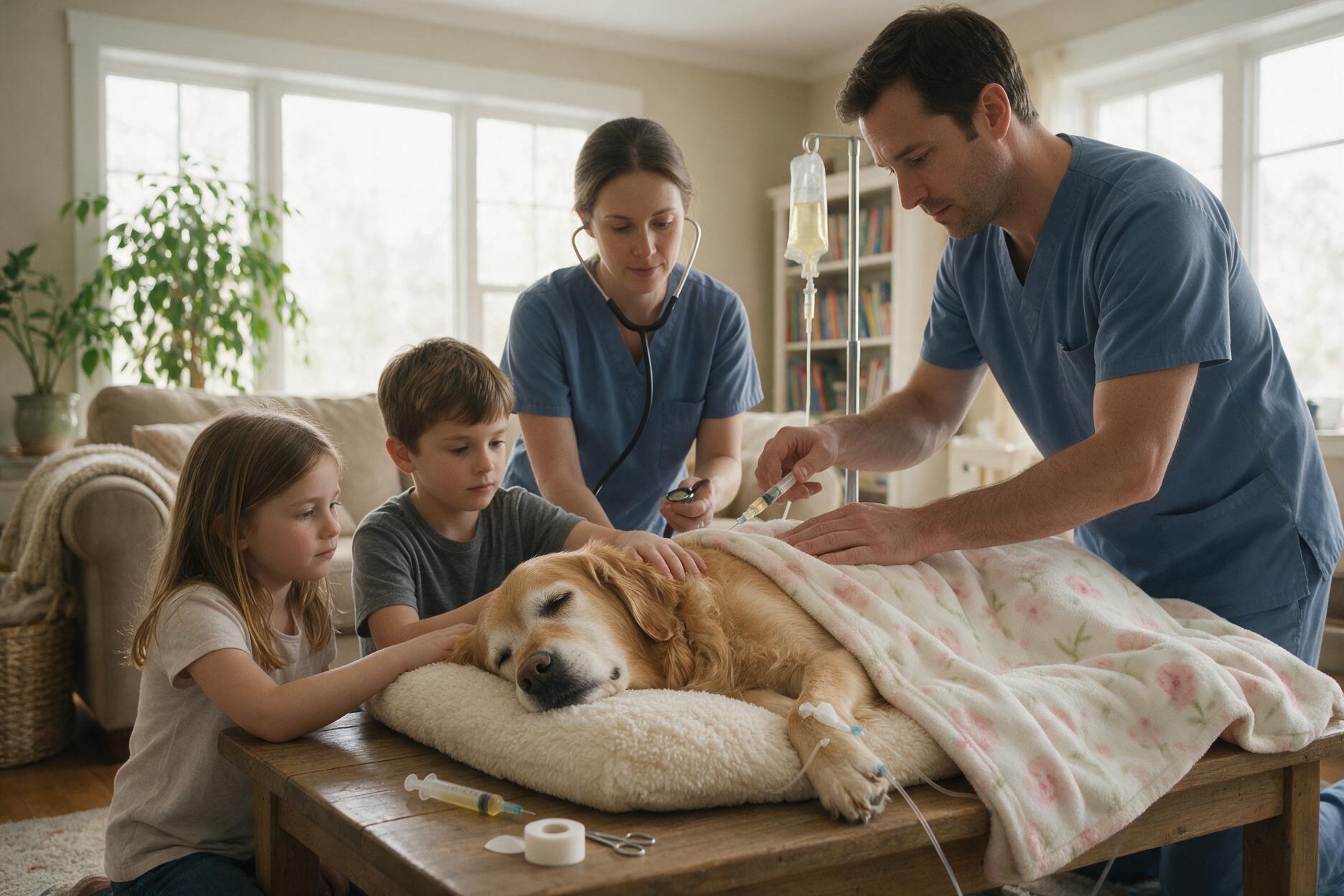
If you're wondering whether your kids should be in the room when your pet is put to sleep, you're not the first parent to sit with this question the night before a visit. Dr. Katie, a mom of three young children herself, talks through this exact decision with families every week at Rover Veterinary Care. Call (561) 295-7979 or reach out here to talk through your family's situation before you decide anything. There's no test to pass and no wrong choice to avoid. Below is how Dr. Katie actually helps families decide, age by age, and what a visit looks like for a child who stays.
Is there a right answer to whether kids should be there?
No, there isn't one right answer, because every child and every family carries a loss differently. Dr. Katie has three young children of her own, so when she talks with you about this she is speaking from her own home, not a textbook. She has watched confident nine year olds sit calmly through an in-home pet euthanasia appointment, and she has watched grown adults need to step outside halfway through. Neither reaction is wrong. Some children, and some adults, simply have a hard time being present for this kind of loss, and that is completely okay. Dr. Katie's approach starts with respecting where each person in your family actually is, not where you think they should be. If your gut tells you your child isn't ready, trust that. If your child insists on staying and you believe they can handle it, that instinct deserves respect too. The goal isn't a rule that applies to every family. It's the right fit for yours.
How do you decide based on your child's age?
You decide largely by looking at your child's age and how independent they already are. For a young child who is mobile but still very dependent on you, crawling or just learning to walk, Dr. Katie often gently recommends they not be in the room. It isn't a judgment on the child. It's a practical reality: a parent cannot fully watch a toddler and be present with a dying pet at the same time, and Dr. Katie wants you free to sit with your pet without splitting your attention. For an older, more independent child, the decision gets made case by case. She recommends a family conversation in advance, away from the moment itself, where you explain simply what will happen. From there, let each person in the family choose. Some will want to stay in the room. Others will want to wait in another room, or leave the house entirely and come back after. You can check Dr. Katie's quality-of-life resources for more on how to talk about this with your family before the day arrives.
What is a visit actually like for a child who stays?
A visit that includes your child is slow and plain-spoken, built around questions instead of silence. Dr. Katie includes children in the explanation of what is happening, using simple, kid-friendly words instead of talking over their heads. She lets them ask whatever they need to ask, and she lets them watch what she is doing, so none of it feels hidden or frightening. Kids tend to do better with information than with mystery. Toward the end of the appointment, children are often invited to take part in something hands-on. Some help press their pet's paw into clay to make a keepsake print. Others help place the letters that spell out their pet's name on the keepsake. It gives them something to do with their hands while their heart is busy, and it turns a hard afternoon into something they made together as a family, not something that just happened to them. There's no rush to any of it.
How to prepare your child, and where to get help
Preparing your child starts with an honest conversation well before the visit, not a quick explanation in the car on the way there. Talk about what will happen in plain terms, and give your child space to say how they feel about it, even if that feeling is confusing or contradictory. If there is any chance your child could become very distraught in the moment, it helps to have a backup adult on hand, someone whose only job that day is to comfort your child and walk them to a quiet space if things get to be too much. That way you aren't managing two things at once. None of this has to be figured out alone. Call Dr. Katie at (561) 295-7979 to talk it through before you decide anything. A phone call is not a commitment. It's just a conversation with someone who has sat with a lot of families in this exact spot, in your own home, on your own timeline.