
Caring for a senior pet in Jupiter, Florida comes with its own set of rewards and challenges. The warm, humid climate along the Treasure Coast can affect aging animals in ways that pet owners in cooler states rarely deal with. This guide covers what to watch for, how to adjust your pet's routine, and when it's time to call a professional.
If your senior pet needs support right now, reach out to Rover Veterinary Care at (561) 295-7979. They specialize in compassionate, in-home care for aging pets across Palm Beach County.
How Do You Know When Your Pet Becomes a Senior?
Most dogs and cats are considered senior at age 7, though larger dog breeds can enter their senior years as early as 5 or 6. The signs go well beyond slowing down on walks. Watch for these early indicators:
- Changes in sleep patterns: Sleeping significantly more, or restlessness at night
- Increased thirst or urination: This can signal kidney disease, diabetes, or thyroid issues
- Noticeable weight shifts: Either gaining or losing weight without a dietary change
- Confusion or disorientation: Sometimes called Cognitive Dysfunction Syndrome, the feline and canine equivalent of dementia
- Lumps, bumps, or new odors: These deserve a vet's attention sooner rather than later
In Jupiter's heat and humidity, pets also show stress-related signs more quickly. A dog that once loved morning walks around Abacoa might now stop after five minutes. That's not laziness. That's your pet communicating discomfort.
What Should Senior Pets Eat in Florida's Heat?
Senior pets need fewer calories but more targeted nutrition, especially during Jupiter's long, humid summers. A dog that was burning energy on long beach walks near Juno Beach in his younger years now needs a diet adjusted for lower activity levels.
Here's what to change:
Protein: Aging pets need high-quality, lean protein to maintain muscle mass. Look for food with real meat listed as the first ingredient. Avoid fillers like corn syrup or artificial preservatives.
Hydration: This one matters more in South Florida than almost anywhere else. Dehydration sets in faster when temperatures sit above 90°F from May through October. Add a second water bowl in the home, consider a pet water fountain to encourage drinking, and watch for signs of dehydration: dry gums, sunken eyes, or skin that doesn't spring back when gently pinched.
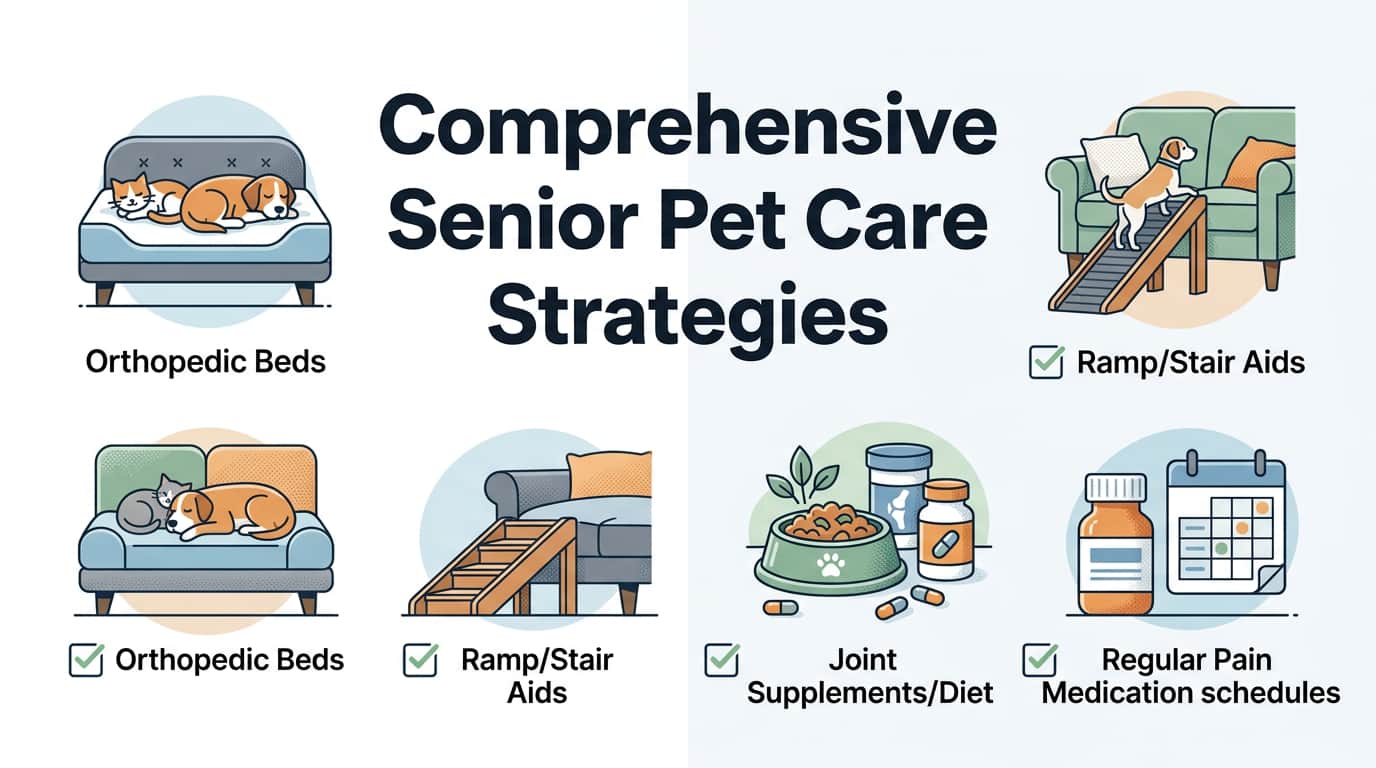
Joint-supporting supplements: Glucosamine and omega-3 fatty acids can reduce inflammation in older joints. Some senior-specific pet foods include these, but a separate supplement is often a better-dosed option. Ask your vet before adding anything new.
Switching food gradually over 7 to 10 days prevents digestive upset. A sudden change, especially to a higher-fiber senior formula, can cause stomach issues.
How Can You Keep a Senior Pet Moving Safely?
Low-impact exercise keeps senior pets mobile, helps manage weight, and supports mental health. The goal isn't distance; it's consistency.
For dogs, two 10 to 15-minute walks per day are often better than one long outing, particularly between June and September when pavement in Jupiter can hit 130°F by midday. Walk in the early morning, before 8 a.m., or after sunset.
For cats, keep them mentally active with puzzle feeders, window perches, and short interactive play sessions using a feather wand. Most senior cats still want to play; they just tire faster.
Orthopedic support makes a real difference for pets with arthritis. Options include:
- Orthopedic foam beds: Reduce pressure on joints, especially hips and elbows
- Pet ramps or steps: Help dogs and cats reach furniture without jumping
- Non-slip mats: Tile and hardwood floors are slippery for pets with weakening muscles. Placing rubber-backed rugs near food bowls and sleeping areas prevents falls.
Florida's humidity can worsen joint inflammation. On especially muggy days, shorter indoor play sessions may be kinder to your pet than outdoor activity.
Why Do Senior Pets Need Twice-Yearly Vet Visits?
Annual checkups aren't enough for pets over 7. A lot can change in 12 months. Bi-annual visits let vets catch conditions early, when treatment options are better, and costs are lower.
A complete senior wellness exam typically includes:
- Full bloodwork panel: Checks kidney and liver function, blood sugar, thyroid levels, and red and white blood cell counts. Early kidney disease, for example, is manageable when caught in stage one, but can be severe by stage three.
- Urinalysis: Flags urinary tract infections, kidney issues, and diabetes
- Blood pressure check: Hypertension is common in older cats and dogs, and often goes undetected without testing
- Dental assessment: Periodontal disease affects around 80% of dogs over age 3, and gets worse with age. Dental disease doesn't just affect the mouth; bacteria can enter the bloodstream and impact the heart and kidneys.
- Screening for lumps: Not every growth is dangerous, but all of them deserve documentation and monitoring
Many pet owners in the Abacoa and Palm Beach Gardens areas are surprised to learn that preventive bloodwork costs far less than treating a condition that's been developing silently for months.
How Do You Make Home Safer for a Senior Pet in Florida?
Your home setup matters as much as diet and exercise for an aging pet's quality of life. A few targeted changes can reduce pain, prevent injury, and lower stress.
Temperature management: Keep indoor temperatures between 68°F and 75°F. Senior pets regulate body temperature less efficiently, and South Florida's summers offer little relief outdoors. Never leave an older pet in a parked car or on a screened porch during peak afternoon heat.
Accessibility adjustments:
- Move food and water bowls to floor level if your pet is used to eating from an elevated surface but now shows neck or shoulder stiffness
- Place litter boxes on the main floor so older cats don't have to climb stairs
- Use night lights in hallways for pets with declining vision
Skin and coat care: Florida's humidity can trap moisture near the skin, contributing to hot spots and skin infections in dogs with thick coats. Brush regularly and check for redness, irritation, or unusual odors between vet visits.
Reducing anxiety: Senior pets are often more anxious than they were in their younger years. Keep routines consistent, avoid rearranging furniture, and provide a quiet, designated rest space away from household noise.
Knowing When It's Time: End-of-Life Care for Your Pet
This is the part of pet ownership nobody wants to think about, but being prepared makes the hardest moments more manageable. Quality of life assessments can help you evaluate your pet's comfort honestly. Vets often use a 1-to-10 scale across categories like pain, appetite, hygiene, mobility, and happiness.
When the time comes, Rover Veterinary Care offers in-home pet euthanasia and cremation services throughout Jupiter and the surrounding Palm Beach County area. Dr. Katie Matzke, DVM, founded the practice in 2020 specifically to provide pets with a peaceful, dignified passing in the comfort of their own home, surrounded by the people they love.
For families considering in-home euthanasia in Jupiter, Florida, pricing starts at $450 for the euthanasia-only package, which includes veterinary travel within approximately 30 minutes of Jupiter Town Hall, a gentle two-step process, and a clay pawprint keepsake. Combined euthanasia and private cremation packages, which include ashes returned in your choice of urn, are available for $700. Weekend, holiday, and evening appointments (after 5 p.m.) carry an additional $100 fee.
Many families who've used in home euthanasia in Jupiter, Florida describe it as the kindest final gift they could give their pet. Rather than a stressful car ride and an unfamiliar clinic, your pet stays in their own space, calm and comfortable, until the very end.
Give Your Senior Pet the Care They Deserve
Your pet has given you years of loyalty and love. The senior years are a chance to return that. Start with a vet visit, adjust the diet, make a few simple home changes, and stay consistent. Small efforts, done regularly, add up to real comfort for an aging animal.
For guidance on pet euthanasia or cremation services, or to ask questions about end-of-life care options including in home euthanasia in Jupiter, Florida, contact Rover Veterinary Care today at (561) 295-7979. Dr. Matzke and her team are here to help you through every stage of your pet's life, with honesty, compassion, and the kind of personal care you won't find at a large clinic.