
· by Katie Matski · 5 min read
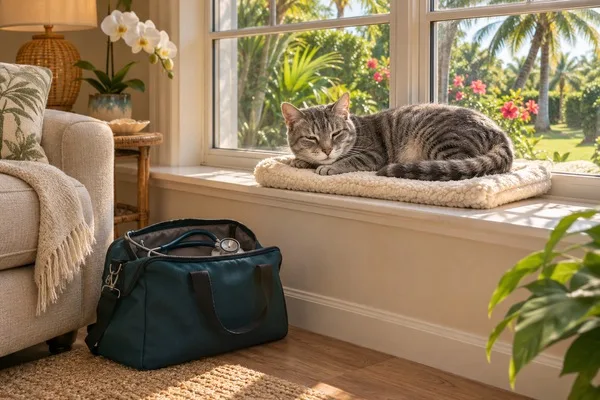
A comfort assessment helps you determine the next steps for your ailing pet by providing a clearer picture of what they are experiencing. If you sense your pet is declining but cannot tell whether it is time, a Comfort Care Assessment at home gives you a calm, honest look at how they are doing, with no commitment to anything.
At Rover Veterinary Care, we visit families across Jupiter and northern Palm Beach County. If you would like help sorting through what you are seeing, reach out to us or call (561) 295-7979.
Why Is It So Hard to Know When It's Time?
Because decline is often slow, and good days still come between the hard ones. Many families feel caught between guilt for considering it and fear of waiting too long.
You may notice your dog taking longer to get up after a nap, or your cat hiding more than usual. Then a good morning comes, and you wonder if you imagined it. That back and forth is one of the most common things we hear from families, and it is completely normal.
It can feel even harder when your pet has been part of every chapter of family life. A senior dog who once ran the paths at Riverbend Park, or a cat who has claimed the same sunny window in your Abacoa home for years, is not easy to imagine letting go of.
There is no single sign that tells you it is time. Pets who still eat, sleep well, and greet you are often simply aging. Pets who are suffering may lie down without really resting, struggle to settle, or pant even when they are still. Sorting out which is which is exactly what a Comfort Care Assessment is for.
What Happens During a Comfort Care Assessment at Home?
It is an in-person quality-of-life exam. Dr. Katie comes to your home, examines your pet, and spends real time talking with you about what you have been seeing.
Because the visit happens at home, your pet does not have to ride in the car or wait in an unfamiliar room. They can stay relaxed in their own space, which often gives a truer picture of how they move, breathe, and respond.
Dr. Katie is a Jupiter native and a University of Florida veterinary graduate who founded Rover Veterinary Care to focus on caring for pets at home. You can read more about Dr. Katie and the team on our site.
Most importantly, scheduling an assessment is not a commitment to euthanasia. Some families leave with a plan for keeping their pet comfortable a while longer. Others come away with more clarity that the time is close. Either way, you will have a clearer view and someone to answer your questions. You can learn more about in-home pet euthanasia whenever you feel ready.
What Should You Note Before the Visit?
Write down what you have noticed about your pet's appetite, mobility, and restlessness over the past few weeks. Small details help paint a fuller picture.
Think about eating and drinking. Is your pet finishing meals, skipping some, or only eating treats? Note changes in water intake too. For mobility, notice whether they struggle with stairs, slip on tile floors, or have stopped jumping onto the couch or bed.
Restlessness matters as well. Pacing at night, panting while at rest, trouble getting comfortable, or hiding can all be signs of discomfort. Note any accidents in the house, changes in grooming, and whether your pet still seems interested in you, their toys, or a short walk around the block.
Some families find it helpful to mark each day as good or bad on a calendar. When the bad days begin to outnumber the good ones, that pattern is worth sharing. Answers to more common questions are on our pet euthanasia FAQ.
When Should You Call to Schedule an Assessment?
Whenever you find yourself wondering, that is a good time to call. You do not need to be sure about anything to ask for help deciding.
Many families wait because they feel they should know the answer first. But the uncertainty is the very reason the assessment exists. Talking things through with someone who has helped many families through this can ease a lot of the weight you have been carrying alone.
A person answers when you call. Our team can tell you what the assessment involves, what to have ready, and how in-home euthanasia works if and when you need it. There is never pressure to book anything beyond the visit you want.
Whatever comes next, whether that is more good days at home or planning a peaceful in-home euthanasia later, you will not be rushed. When you want help deciding, contact Rover Veterinary Care or call (561) 295-7979 to schedule a Comfort Care Assessment.