
· by Donna Dosado · 4 min read
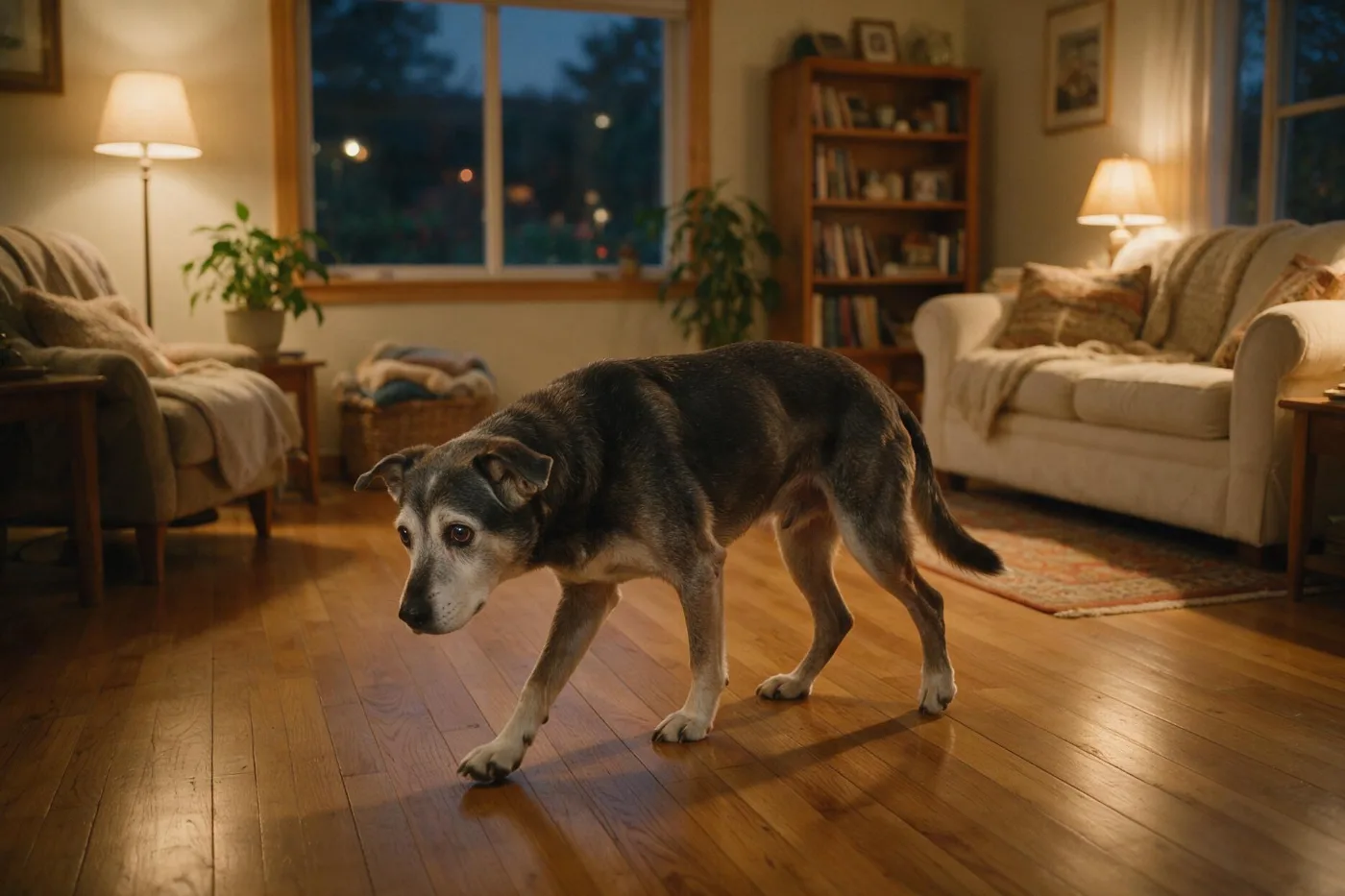
You've heard your old dog's nails clicking across the floor more nights than you can count now, pacing from the bedroom to the hallway and back, panting even though the house is cool and quiet. Nothing you try, not a walk, not a late snack, seems to settle him for long. If this has become part of your nights, you're not imagining it, and you don't have to keep guessing alone. Call Dr. Katie at (775) 800-6463 or send a message anytime and we'll help you figure out what's going on.
What is my pet trying to tell me by pacing and panting?
Pacing and panting with no heat and no exertion behind it is usually your dog telling you something hurts or feels wrong. Most old dogs, especially the tougher, quieter ones, don't whine or cry when they're in pain. They just can't settle. He gets up, turns a slow circle, and lies back down, but rarely for long before he's pacing again, unable to find a position that feels right. The panting isn't about being warm. It's what a body does when it's working through discomfort it has no other way to express. For a dog who has spent years being easygoing and low maintenance, this restlessness might be the clearest signal he can give you. It's worth paying attention to rather than writing it off as him just getting older. If the pattern is new, or it's gotten worse over the past few weeks, treat it as information about him, not only as a rough night for you.
Why is this so often missed until it's far along?
It gets missed because it builds so gradually that it starts to look like ordinary old-dog restlessness instead of a real problem. One night he's a little more unsettled than usual. A few weeks later, it's most nights. By the time you notice a pattern, it can feel like it's always been this way, so there's no clear moment that tells you to call someone. Dr. Katie hears a version of the same thing from families almost every week. Right after she gives the first sedative during a visit, someone will say something like, this is the calmest I've seen him in weeks. Watching your dog's shoulders finally drop and his breathing slow down, you realize how much the pacing had been covering up. That gap between what you were seeing and what was actually going on is common, and it's part of why Rover Veterinary Care exists, to help you see clearly what's been hard to catch on your own.
Could it be anxiety instead of pain?
It could be either, honestly, and that's exactly why a guess isn't good enough here. Pain and anxiety can look almost identical in an older dog, the same pacing, the same panting, the same inability to settle. Night tends to be the most telling time. If your dog is up and down over and over once the house goes quiet, unable to get comfortable no matter how you rearrange his bed or sit with him, that's worth a real look rather than a guess at home. A vet's exam can sort out what's actually driving it, whether that's joint pain or something like anxiety, and each gets treated differently. Our quality-of-life resources walk through some of the signs owners commonly miss, but they're a starting point for the conversation, not a replacement for an exam. You know your dog better than anyone, and that instinct that something has changed is usually right. It just needs a professional to confirm what it means.
When restlessness means it's time to talk to a vet
When the pacing and panting keep showing up night after night and nothing at home makes a difference, it's time to bring your primary vet into it so they can look for a cause and start treating it. Sometimes medication or a change in routine settles things down considerably. But if your dog is clearly declining and the good nights are getting harder to find, you don't have to keep guessing about what comes next. Dr. Katie's Comfort Care Assessment is an in-home quality-of-life exam and an honest, unhurried conversation in your own living room, a natural next step if you're already weighing in-home pet euthanasia and want real answers before you decide anything. Nobody here is pushing you toward a choice. Call Dr. Katie at (775) 800-6463 or reach out whenever you're ready to talk. A phone call doesn't commit you to anything, it just gets you answers, at whatever pace you and your dog need.