The HHHHHMM Scale: Measuring Pet Quality of Life

Watching your beloved dog or cat grow old is heartbreaking. Many owners struggle to know if their pet is suffering or just slowing down. If you need immediate guidance navigating this difficult time, contact Rover Veterinary Care at (775) 800-6463. Providing in home euthanasia Reno, Nevada, we know how heavy this burden feels for local families. That is why veterinarians rely on the HHHHHMM Quality of Life Scale. This tool gives you an objective, clinical way to measure your pet's daily well-being. It removes the guesswork and guilt from your decision-making process.
What Is the HHHHHMM Quality of Life Scale?
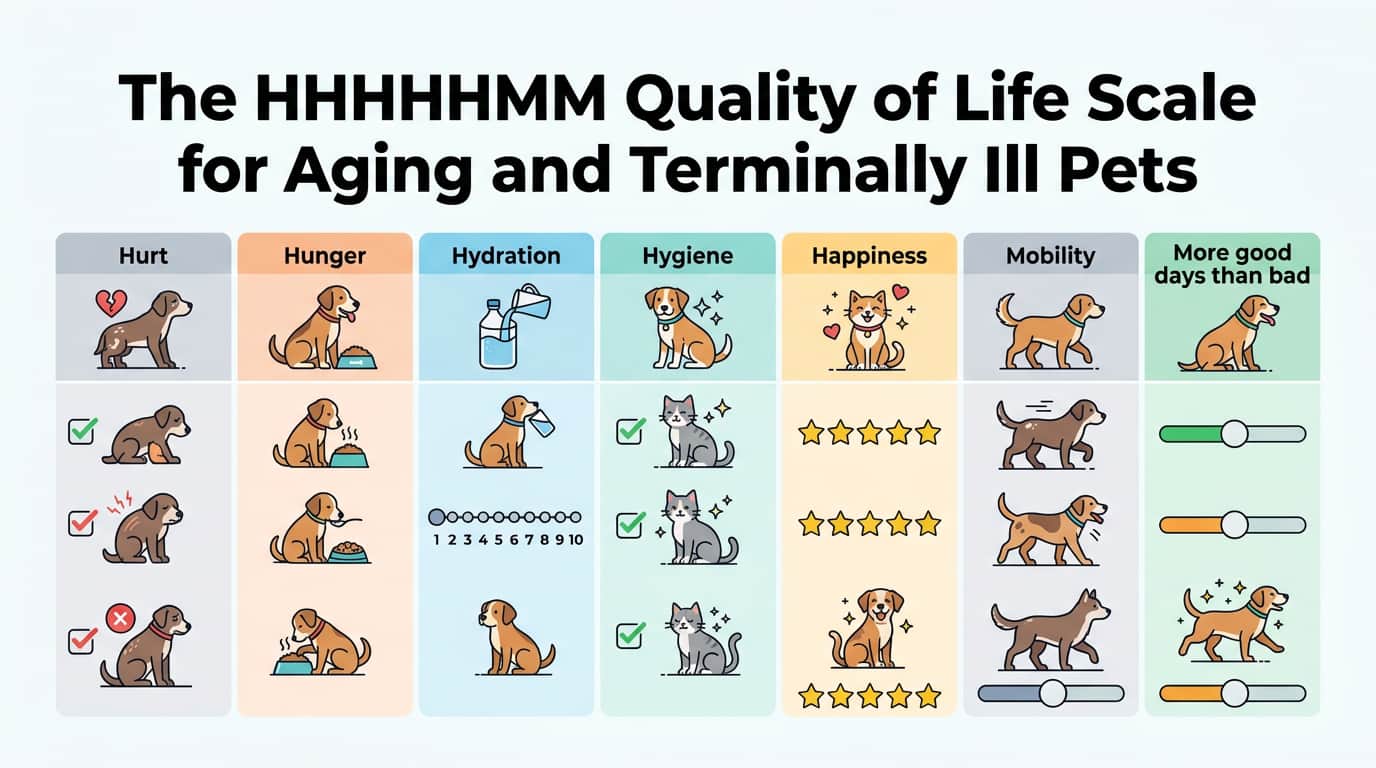
The HHHHHMM scale is an objective tool used to evaluate an aging pet's well-being on a scale of 1 to 10 for seven categories. A score above 35 generally indicates an acceptable quality of life. In our years serving local families, we find this clinical approach helps owners see past their grief.
Dr. Alice Villalobos created this scale to help pet parents assess their furry friends during hospice care. You grade your pet on hurt, hunger, hydration, hygiene, happiness, mobility, and having more good days than bad. This system allows you to make medical decisions based on data rather than just emotion. When you use a structured scale, you replace anxiety with a clear understanding of your pet's physical reality.
How Do You Evaluate Your Pet's Pain and Hunger?
Assess hurt by watching for heavy panting, hiding, or flinching when touched. Grade hunger by seeing if your pet eats willingly or needs hand-feeding. A score of 10 means no pain and a great appetite. Pain management is the most vital factor for terminally ill pets.
We often see senior dogs in the South Creek neighborhood hide their discomfort until it becomes severe. Talk to your vet about pain relief options to keep your pet comfortable. For nutrition, try warming up their food or offering high-value treats to encourage eating. If your cat refuses to eat for 24 hours, their hunger score drops significantly. You can sometimes stimulate their appetite with strong-smelling wet food or specialized veterinary diets.
Why Are Hydration and Hygiene Vital for Pets?
Proper hydration keeps your pet's organs functioning, while good hygiene prevents painful infections and bedsores. A healthy pet scores high by drinking enough water and keeping themselves clean. Dehydration happens fast in our dry Northern Nevada climate.
You can check hydration by gently lifting the skin on your pet's neck. If it snaps back quickly, they are hydrated. If it stays tented, they need fluids. You might need to add water to their meals or administer subcutaneous fluids at home. For hygiene, older pets often lose the ability to groom themselves. You'll need to brush them, clean up accidents promptly, and provide soft, dry bedding. Check their resting areas daily to prevent painful skin ulcers.
How Do You Measure Happiness and Mobility?
Happiness means your pet still shows interest in family, toys, or treats. Mobility is their ability to get up and move around without assistance. Grade these based on their daily interactions. Does your dog still wag their tail when you come home to your house in Sparks?
Can your cat still reach the litter box easily? If your pet spends 90 percent of the day isolated and cannot stand without help, their scores for these categories fall. You can boost their mobility score by providing physical support. Ramps, rugs on slippery floors, and carrying harnesses help them move safely. Happiness often connects directly to mobility. When they can interact with the family, their emotional state improves.
What Does “More Good Days Than Bad” Mean?
A good day is when your pet is comfortable, engaged, and eating, while a bad day involves pain, nausea, or total isolation. When bad days outnumber good days, their quality of life has dropped too low. Keeping a daily journal helps you track this objectively.
When you look back over two weeks of notes, the pattern becomes clear. This clinical metric protects your pet from prolonged suffering. The goal is to maximize their comfort while minimizing their distress. When the bad days take over, it is time to consider pet euthanasia.
How Can You Track This at Home in Reno?
Print the HHHHHMM scale and grade your pet at the same time every evening. Keep a notebook on your kitchen counter to log their daily score. Consistency gives you the most accurate picture of their decline.
In our experience helping families along the Truckee River and throughout the city, owners who journal feel much more confident in their decisions. You won't have to rely on memory. You can look at the numbers and see the exact trajectory of your pet's health. If your pet's total score consistently falls below 35, consult a veterinarian immediately.
When Is the Right Time to Say Goodbye?
The right time to say goodbye is when your pet's pain cannot be managed and their HHHHHMM score remains consistently low. At this stage, choosing Rover Veterinary Care for end-of-life care prevents further suffering.
We offer peaceful in home euthanasia Reno, Nevada. This allows your pet to pass with dignity in their favorite spot. We provide transparent pricing to help you plan during this stressful time. Our basic euthanasia packages start at $400 for families within a 30-minute radius of Reno City Hall. Euthanasia with communal cremation costs $520, and private cremation with ashes returned is $720. Pets over 100 pounds or extended travel distances incur additional fees. Providing a painless passing is the kindest final gift you can offer your best friend.
Need Help With Your Pet's Care?
Making end-of-life decisions for your pet is never easy. Using the HHHHHMM scale gives you the clarity you need to advocate for their comfort. If you notice a sharp decline in your pet's score, you don't have to face this alone. We provide compassionate in home euthanasia Reno, Nevada. Your best friend can pass peacefully surrounded by family. Whether you live in Midtown or out in Dayton, our team is ready to support you. For guidance or to schedule a visit, contact Rover Veterinary Care at (775) 800-6463.