· by Katie Matski · 5 min read
Whether children should be present during a pet's euthanasia at home is one of the questions parents ask most often, and there is no single right answer. It depends on the child's age, temperament, and what the family has talked through in advance. What research and experience both suggest is that excluding children entirely, without explanation, tends to cause more distress than including them thoughtfully. Rover Veterinary Care has helped many Reno families think through exactly this question. Call or message Rover Veterinary Care at (775) 800-6463 to talk it through before the day arrives.
The case for letting older kids be present
Families in the South Meadows area of Reno frequently have school-age children who have grown up alongside the family pet. For kids who are old enough to understand what is happening and to have a say in the matter, participation can be meaningful. Being present, being able to say goodbye, and seeing that the process is peaceful rather than frightening can actually reduce anxiety rather than create it. The key is giving them a real choice in advance, not a last-minute decision made in the moment. A child who chooses to be there and is prepared for what they will see is in a very different position from one who is surprised by what unfolds.
Dr. Katie is a mother of three, and that shapes how she approaches visits where children are involved. When kids are present in Damonte Ranch homes and across the Reno area, she takes a few minutes at the start of the visit to explain what will happen in language that fits the child's age. She answers their questions directly. She does not use euphemisms that will confuse a child later when they process what happened. Children often ask very specific questions, and they deserve specific answers.
One thing families in the Northwest Reno area consistently report is that children who were present for the visit, when it was handled calmly and honestly, tend to carry less lingering anxiety afterward than those who were kept in another room while something unknown was happening. Exclusion leaves gaps that a child's imagination fills, and imagination is rarely gentler than reality.
When it makes more sense to have kids step out
For toddlers and very young children who are mobile but not yet able to understand what is happening, Dr. Katie's general guidance is that it is often better for them to be elsewhere during the procedure itself. The reason is practical: when a young child is in the room, a parent's attention is divided. Part of them is managing the child, redirecting them, and watching for distress. That divided attention can make it harder for the parent to be fully present with their pet during a moment that deserves full presence. Having a trusted neighbor, family member, or friend take the younger children for a walk or an activity nearby allows the adults to focus completely.
That backup caregiver plan is worth arranging in advance regardless of the ages of the children involved. Even an older child may reach a point during the visit where they want to step outside, and knowing there is a comfortable option for that, a familiar adult, a quiet room, a clear plan, makes it easier for everyone to follow their instincts in the moment rather than feel locked into a decision they made the week before.
How to talk to children beforehand
Honest, direct language holds up better over time than gentle euphemisms. Telling a child that the pet "went to sleep" or "went away" creates confusion and sometimes fear around sleeping or leaving. Saying clearly that the pet's body stopped working, that it was not painful, and that the family was with them tends to give children something real to hold onto as they grieve.
A few things that help with that conversation:
- Have it before the day of the visit, so the child has time to ask questions and sit with the information.
- Give them a role if they want one. Helping make the clay pawprint that Dr. Katie creates at the end of the visit is something many children find meaningful.
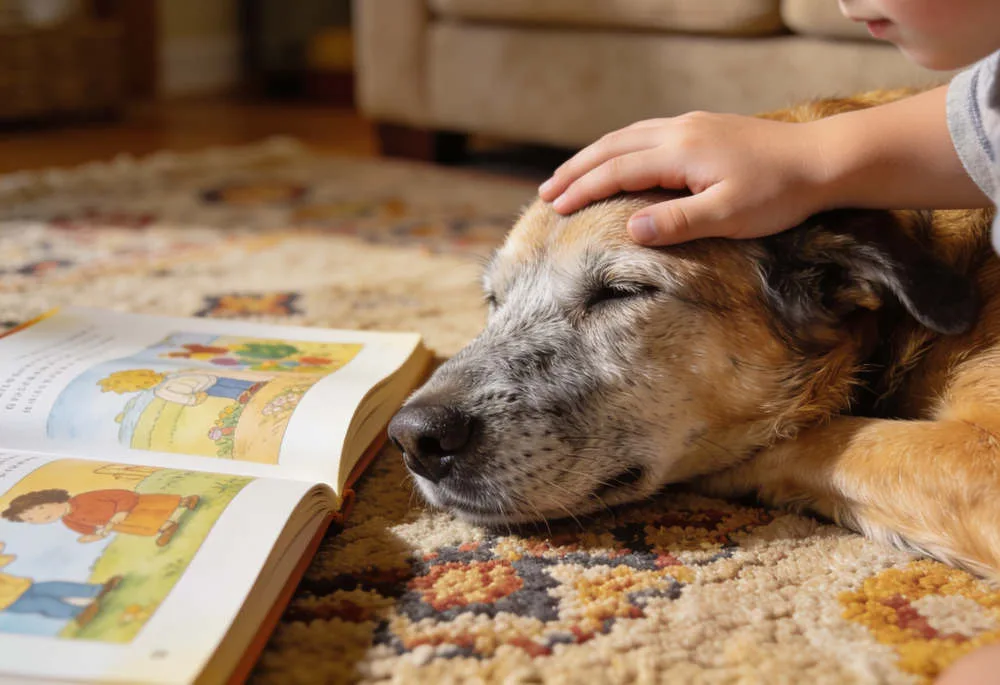
- Read together beforehand. "Over the Rainbow Bridge" is the children's book that families mention most often in their feedback as genuinely helpful, not just comforting but honest in a way children respond to.
- Let them know it is okay to be sad, and that you are sad too.
What the visit itself looks like when children are involved
The pet euthanasia procedure has two steps, and Dr. Katie explains both to children in plain terms when they are present. The first injection brings the pet into a deep, peaceful sleep over five to ten minutes. Children can see that their pet is relaxed and comfortable. The second step is very gentle and quick. After, Dr. Katie gives the family private time, and children are often the ones who most want to participate in making the pawprint keepsake or sitting quietly with their pet.
For families who choose pet cremation, Dr. Katie handles the transport with care, so families can explain to children that the pet is being looked after even after the visit ends. That continuity matters to kids in ways adults do not always anticipate.
There is no perfect way to do this. There is only what fits your family and your children. If you want to talk through what makes sense for your specific situation before the day comes, that conversation is exactly what the phone is for. Call Rover Veterinary Care at (775) 800-6463 or send a message to Rover Veterinary Care and ask whatever you need to ask.