Watching your pet slow down is one of the hardest parts of being a pet owner. If your dog or cat is aging, you may already be asking yourself: Are they still having more good days than bad? Knowing how to answer that question clearly, not just emotionally, can make all the difference. If you're not sure where to start, Rover Veterinary Care is here to help you think it through. Call us at (775) 800-6463 anytime.
Reno's climate adds an extra layer of challenge for senior pets. Cold winters near Midtown and dry, high-altitude summers around South Meadows can worsen joint pain, dehydration, and respiratory issues in aging animals. A dog who managed fine last year may struggle significantly once temperatures drop below 30°F or spike above 95°F. These environmental stressors make regular, honest quality of life assessments more than a good idea. They're necessary.
What Does "Quality of Life" Actually Mean for a Pet?
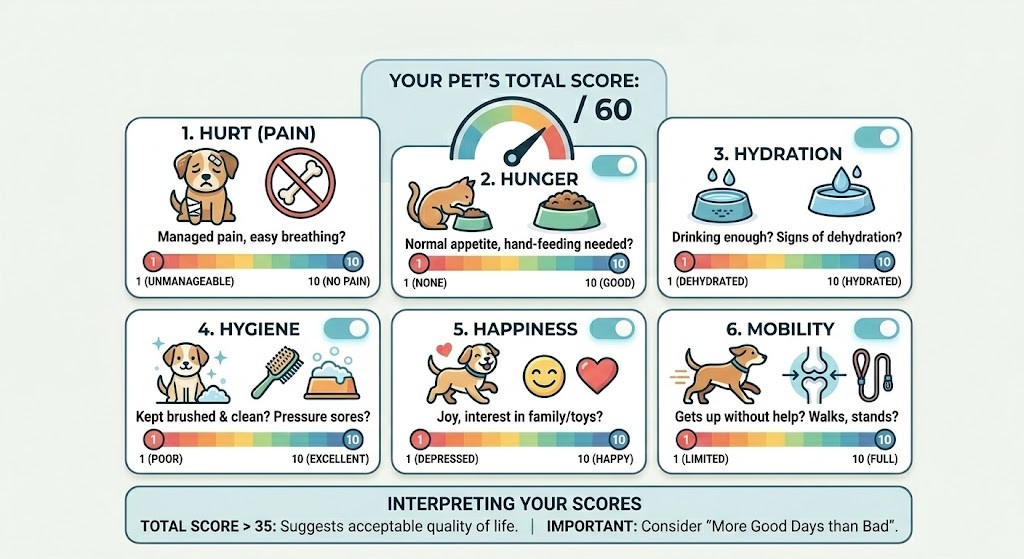
Quality of life for a senior pet goes beyond simply watching for good days and bad days. It's a structured, objective look at whether your pet is experiencing more comfort than suffering consistently. Vets and end-of-life specialists typically evaluate seven core areas: hurt, hunger, hydration, hygiene, happiness, mobility, and whether good days outnumber bad ones.
This framework is commonly called the HHHHHMM scale, developed by veterinary oncologist Dr. Alice Villalobos. Each category is scored from 1 to 10, with a total score of 35 or above out of 70 generally considered acceptable quality of life. Scoring below 35 consistently over two weeks is a signal worth discussing with your vet.
The truth: families who track these scores regularly tend to make end-of-life decisions with more clarity and less regret. It gives you something concrete to hold onto during one of the most emotionally difficult times you'll face as a pet owner.
How Do You Use the HHHHHMM Scale?
Score each category from 1 (poor) to 10 (excellent) once a day for at least one to two weeks. Here's what to look for in each area:
Hurt: Is your pet's pain controlled? Signs of unmanaged pain include panting at rest, reluctance to be touched, hunched posture, and restlessness at night. A score of 1 here means pain is severe and unrelieved; a 10 means they appear comfortable most of the time.
Hunger: Is your pet eating enough to maintain body weight? Significant muscle loss over the spine and hips is a warning sign. A pet who has lost more than 10-15% of their body weight in the past 30 days needs immediate attention.
Hydration: Gently pinch the skin on the back of the neck. In a well-hydrated pet, it snaps back within 1-2 seconds. If it takes longer, your pet may be dehydrated, which is common in senior cats, especially.
Hygiene: Can your pet be kept clean and comfortable? Pets who can no longer groom themselves or control their bladder and bowels need more intensive care. Pressure sores from inability to move can develop within 24-48 hours in immobile pets.
Happiness: Does your pet still respond to you, their favorite people, or toys? A cat who still purrs when you sit beside them or a dog who lifts their head when they hear your voice is showing emotional engagement. A score of 1 means complete withdrawal.
Mobility: Can your pet get up, reposition, or move to water without help? Many senior pets in Reno deal with arthritis, which stiffens significantly in cold weather. If your pet can't rise without assistance more than 50% of the time, that's a low score.
More Good Days Than Bad: Step back and ask honestly. Over the last two weeks, has your pet seemed more comfortable than uncomfortable? Tracking this daily makes the answer clearer than relying on memory alone.
What Physical Signs Should You Watch For?
Beyond the scoring tool, several physical changes signal a decline in quality of life. Watch for these in your pet over time:
Mobility changes are often the first sign. A dog who used to walk the Truckee River Trail without stopping may now struggle to reach the backyard. A cat who slept on the couch may stop jumping entirely. Stiffness that lasts more than 30 minutes after waking up, or a reluctance to use stairs, points to significant joint pain.
Appetite shifts matter too. Missing one meal occasionally isn't a crisis. But a pet who refuses food for more than 48 hours, or who only eats when hand-fed, is telling you something important.
Sensory decline is easy to overlook. Cloudy eyes, reduced response to sounds, and bumping into furniture are signs your pet's world is getting smaller. These don't automatically mean poor quality of life, but they do affect how your pet experiences their environment.
How Do You Assess Emotional Well-Being?
Senior pets can experience cognitive dysfunction syndrome, the animal equivalent of dementia. In dogs, roughly 28% of those aged 11-12 years and up to 68% of dogs aged 15-16 show signs of it. In cats, the numbers are similar. Signs include:
- Staring at walls or into space for extended periods
- Getting "lost" in familiar rooms
- Disrupted sleep cycles, particularly increased nighttime restlessness
- Reduced interest in family interaction or play
- Appearing anxious or confused in surroundings they've known for years
Emotional well-being also includes social engagement. A dog who still gets excited when family comes home, even mildly, is showing a meaningful quality-of-life signal. A pet who has withdrawn completely from family contact over a period of two to four weeks has crossed a threshold worth discussing with a vet.
How Can Your Vet Help With a Palliative Care Plan?
Working with a veterinarian on a palliative care plan gives you a structured path forward. Palliative care for pets focuses on comfort rather than cure, and it's appropriate for any senior pet with a serious or terminal condition.
A good palliative care conversation covers: current pain management options (including medications, acupuncture, or laser therapy), a plan for monitoring decline at home, and clear guidance on what changes should prompt an urgent call. Many families in the Sparks and Reno area find that having this plan in place reduces anxiety because they know exactly what to watch for and who to call.
Rover Veterinary Care works closely with families in this planning stage. Dr. Katie Matzke and her team bring the conversation to your home, so your pet stays comfortable throughout.
What Are Your Options When It's Time to Say Goodbye?
This is the question no one wants to ask, and yet it's the one that matters most. When your pet's quality of life score stays consistently below 35, or when pain can no longer be managed, it's time to have an honest conversation about end of life.
For families in the Reno area, in-home euthanasia Reno Nevada is an option that allows your pet to pass peacefully in the place they know best. No clinic smells, no waiting room, no car ride that causes pain or fear. Your pet can be surrounded by family, in their favorite spot, with no added stress.
Rover Veterinary Care offers in home euthanasia and pet cremation services at transparent prices. The euthanasia-only package starts at $400, which includes travel within a 30-minute radius of Reno City Hall and a clay pawprint keepsake. If you'd prefer to have aftercare handled as well, combined packages range from $520 for communal cremation to $720 for private cremation with ashes returned in your choice of eight urns.
Many families tell us that choosing in home euthanasia Reno Nevada gave them a sense of peace they didn't expect. Being at home, without the rush of a clinic visit, allowed them to say goodbye on their own terms.
Timing is personal. There's no single right answer. But most veterinarians agree: it's better to say goodbye one day too soon than one day too late. Suffering at the end doesn't honor the life your pet lived.
Honoring the Bond in Your Pet's Final Chapter
Your senior pet gave you years of loyalty, comfort, and love. What they need from you now is the same honest care they've always received. Use the HHHHHMM scale as your guide. Track scores weekly. Talk to your vet when things shift. And when the time comes, know that options exist to make that final moment as peaceful as possible.
In home euthanasia Reno Nevada families trust starts with a conversation. Rover Veterinary Care is available by call or text at (775) 800-6463. Reach out anytime, whether you're in the early stages of planning or facing an urgent decision today. You don't have to figure this out alone.