
· by Donna Dosado · 5 min read
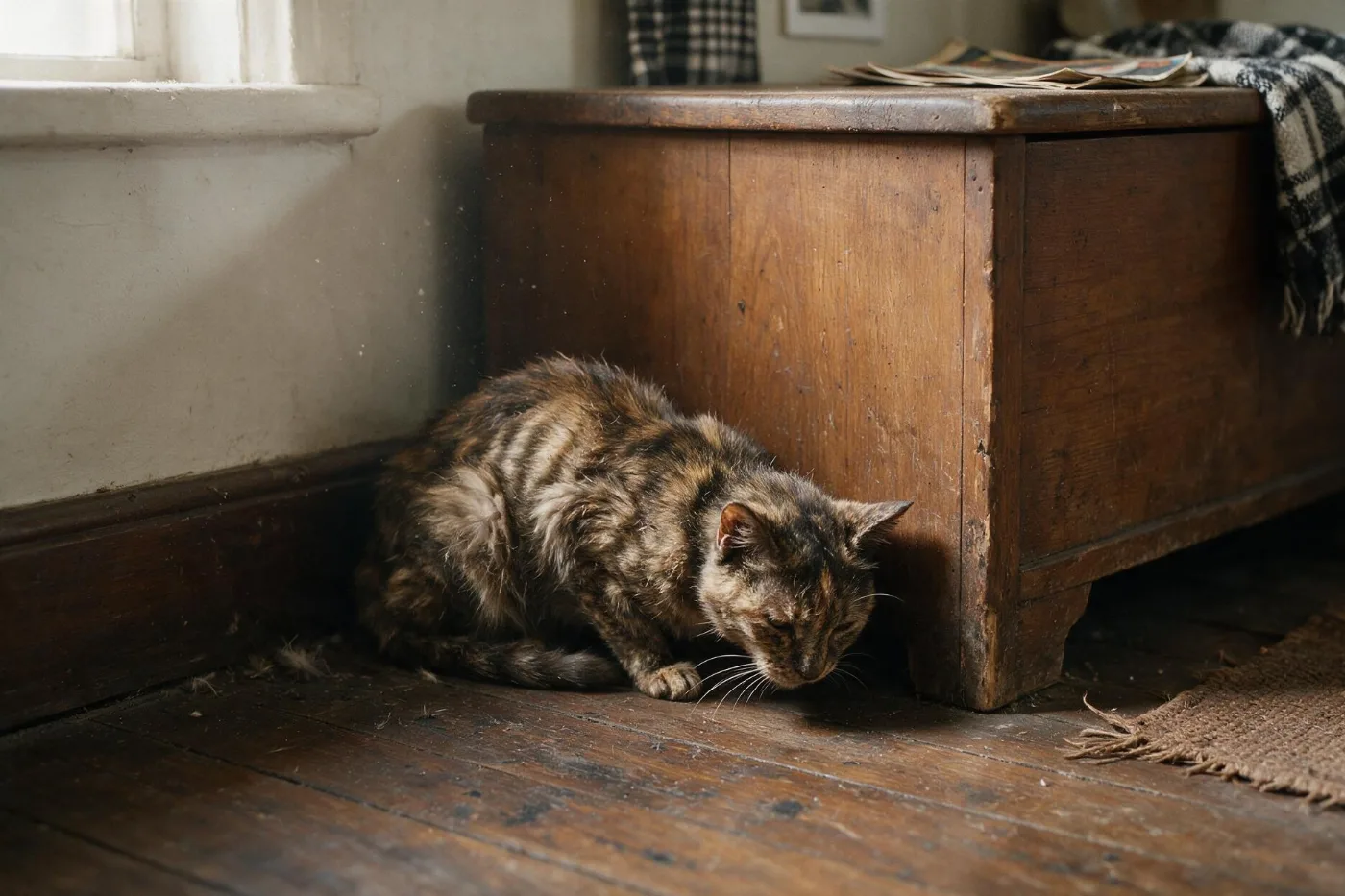
You know your cat's normal moods: the stretch after a nap, the yowl for breakfast right on schedule. When that routine quietly falls apart and you can't quite say why, trust that instinct. Cats are known for hiding sickness until it's nearly impossible to miss, which leaves a lot of owners feeling like they should have caught it sooner even though they were watching closely the whole time. If something about your cat feels different lately and you want a second opinion, call Dr. Katie's Reno team at (775) 800-6463, or reach out through our contact page anytime you want to talk through what you're noticing.
Why do cats mask pain better than almost any pet?
Cats mask pain better than almost any pet because their instincts are built for it. In the wild, an animal that limps or favors a sore leg is the one predators single out, so cats learned long ago to hide weakness rather than announce it. That instinct hasn't faded just because your cat sleeps on the couch instead of hunting for a living. Her pain is also quieter to begin with than a dog's. Dogs tend to wear discomfort openly, limping through the living room or yelping when you touch a sore spot. Cats rarely do either. They also don't take walks or go on hikes, so the kind of limping or stiffness that would jump out at you with a dog can slip by for weeks in a cat who mostly rests and moves around the house on her own schedule. Because of this, a change in behavior, not a change in how she walks, is usually the first real sign that something medical is wrong. Maybe she's slower to greet you at the door, or reluctant to make her usual jump onto the bed. Small shifts like these are often the loudest thing a cat in pain will tell you.
What does a hiding, withdrawn cat usually mean?
A hiding, withdrawn cat usually means her body doesn't feel right, even if nothing looks obviously wrong. Cats who are normally social, greeting you at the door or curling up on your lap during dinner, will often retreat to a closet or under the bed when they start to feel unwell. It's not that she's mad at you or being distant for no reason. Withdrawal is one of the few honest signals a cat gives when something hurts or feels off internally, whether that's arthritis, nausea, or something else that needs a vet's attention. If you've noticed your cat spending more time alone than usual and you're trying to figure out whether it's a phase or something more, our quality-of-life resources walk through the kinds of changes worth watching for and when they typically mean it's time to get help. Trust the shift. A cat that used to want to be near you and suddenly doesn't is telling you something.
Why do litter box trouble and quiet weight loss matter?
Litter box trouble and quiet weight loss matter because they're often the only outward clue that something painful is going on inside. A cat that stops using the litter box, or starts missing it, may have arthritis bad enough that climbing over a high side or squatting down to go simply hurts too much to do reliably. It looks like a behavior problem. It's usually a pain problem. Weight loss can be even sneakier to catch. In a home with free-feeding or more than one cat sharing a bowl, it's easy to assume everyone is eating fine when really one cat has quietly cut back or stopped eating altogether, and you don't notice until her weight has dropped enough to feel different when you pick her up. At Rover Veterinary Care, we hear from Reno families who say they wish they'd called sooner, not because they weren't paying attention, but because these signs are hard to catch in the middle of daily life. If either of these sounds familiar, it's worth a closer look rather than waiting to see if it resolves on its own.
Getting help when your cat is suffering
Getting help when your cat is suffering starts with a visit to her regular vet, who can examine her and begin treatment for whatever is causing the pain. Many cats improve significantly once arthritis or another treatable condition is addressed, so this first step matters and shouldn't be skipped. If your cat's decline has gone on longer, or her vet has told you there isn't much more medicine can do, Dr. Katie offers a Comfort Care Assessment right in your Reno home. It's an honest, unhurried look at your cat's day to day comfort, paired with a real conversation about what her quality of life looks like now and what your options are, including in-home pet euthanasia when the time comes. You can only act on what you're able to see, and if you've made it this far because you're worried, that worry is already a form of love. Asking for help is not giving up on her. It's one more way of taking care of her. When you're ready to talk, call Dr. Katie's team in Reno at (775) 800-6463, or get in touch anytime. There's no pressure and no commitment, just a conversation about what's next for your cat.