
· by Katie Matski · 5 min read
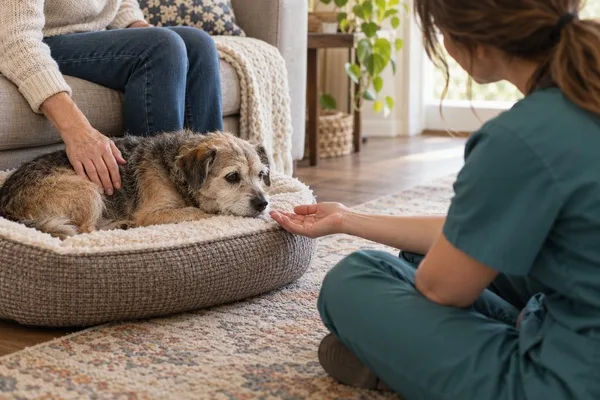
For a pet who is afraid of the car, the clinic, or new people, in home euthanasia removes the biggest sources of fear. Your pet stays in a familiar place, surrounded by their family and their own smells, while our veterinarian moves slowly and gently so they can feel safe until the very end.
At Rover Veterinary Care, we take the time to understand your pet before we arrive. To talk through your pet's fears and your timing, reach out to our team or call or text (775) 800-6463.
Why is a final clinic trip so hard for anxious pets?
Because it can bring together everything a fearful pet finds frightening. The car ride, the unfamiliar smells, other animals in the waiting room, and strangers handling them can all add up to stress, at a moment when you want them to feel only peace.
Some pets shake, pant, or hide the moment they see a carrier or hear the car keys. Others may struggle or freeze on the exam table. For families, watching that fear in a pet's final hours can be heartbreaking.
Choosing a goodbye at home changes that. There is no drive across town, whether you live near Rancho San Rafael Park, out in Sparks, or down in Washoe Valley. There is no lobby and no table. Your pet can stay on their bed, in their favorite corner, or curled up next to you.
It is also easier on the family. You do not have to carry a frightened pet to the car or manage their fear while also managing your own grief. You can focus on being present with them.
How does an in-home visit help a fearful pet feel safe?
It lets your pet stay where they already feel secure, with the people they trust most. Familiar sounds, smells, and routines help calm a nervous animal in ways a clinic cannot.
Our veterinarian will follow your pet's lead. That may mean entering quietly, sitting on the floor, avoiding direct eye contact, and giving your pet time to get used to a new person in the room before anything begins. There is no rush.
An owner once told us he was worried because his dog was skittish and would probably hide behind the couch as soon as the vets arrived.
We talked with him ahead of time and developed a plan that would help put her at ease and make her last moments as peaceful as possible. That kind of conversation before the visit is one of the most helpful things a family can do for a fearful pet.
If your pet is happier outside, we can also meet you at a quiet local spot, such as a Reno or Sparks park. Some pets feel calmer outdoors, near the Truckee River or on a familiar path.
What calm, unrushed steps make the goodbye peaceful?
We use a gentle two-step process that is painless at every stage. Everything moves at your pet's pace, and you can stay close the entire time.
First, your pet receives medication that helps them relax deeply and drift into a peaceful sleep. For anxious pets, this first step matters most, because it lets them settle before anything else happens. You can hold them, talk softly, or simply sit beside them as they relax.
Only once your pet is fully comfortable and asleep does the second step happen. It is quiet and calm, and your pet is already peacefully asleep.
Afterward, you can take as much time as you need. There is no hurry to say goodbye. When you are ready, our veterinarian gently prepares your pet for aftercare, which can include communal, individual, or private cremation, along with a clay pawprint keepsake at no extra charge.
Learn more about our pet euthanasia services and the aftercare choices available.
What comfort ideas help an anxious pet at home?
Small, familiar comforts can make a big difference. Think about the places, objects, and routines that help your pet relax on an ordinary day, and bring those into the moment.
A favorite blanket or bed gives them a soft, familiar place to rest. A quiet room, away from doorbells, traffic, and other noise, helps keep the space calm. Closing the blinds or dimming the lights can soften the setting too.
Familiar smells are powerful. A shirt you have worn, a favorite toy, or the spot where they always nap can help your pet feel secure. Some families play soft music or keep a fan or heater running if that is part of their pet's normal routine.
Treats can help too, if your pet is still interested in food. A favorite snack can be a gentle distraction and a final joy.
If you have other pets, think about whether their presence will calm or upset your pet. We can help you decide what makes sense for your household.
When should you call to talk about your pet's fears?
Call whenever you start to wonder about timing, even if you are not ready to schedule. Talking early gives us time to learn about your pet and plan a visit that fits their needs.
Tell us what frightens your pet. Do they hide from visitors? Bark at the door? Dislike being touched in certain places? The more we know, the better we can prepare.
A real person answers the phone seven days a week, and visits can often be arranged within 12 to 24 hours. We travel throughout Reno, Sparks, and Washoe Valley.
There is no pressure and no obligation. Just a conversation about what is right for your pet and your family.
When you are ready to talk through your pet's fears and timing, contact Rover Veterinary Care or call or text (775) 800-6463. We are here to help.